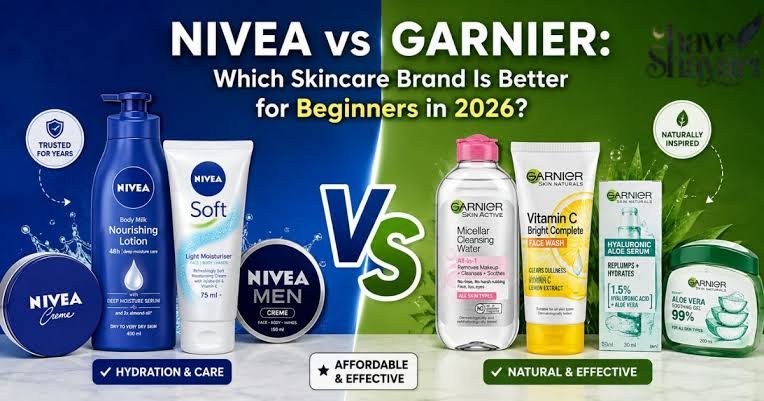
Nivea is often easier for basic moisturising. Garnier offers more targeted options.
However, your skin type matters more than the brand name.
Nivea vs Garnier at a Glance
| Comparison point | Nivea | Garnier |
|---|---|---|
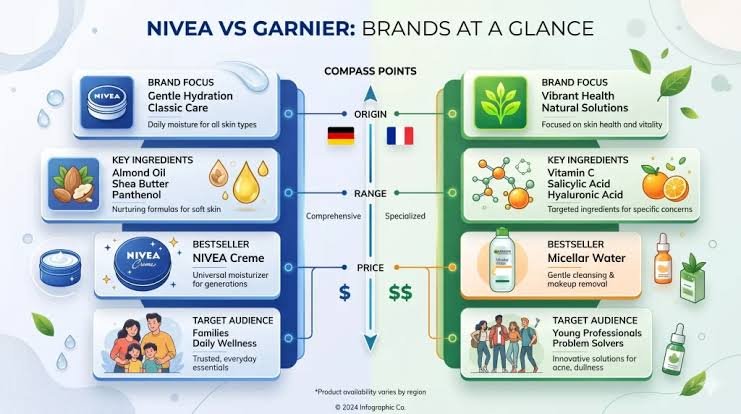
| Best known for | Moisturising creams and body care | Cleansers, micellar water, serums |
| Beginner appeal | Familiar and straightforward | Wider concern-based selection |
| Common focus | Dryness and barrier comfort | Oil, blemishes, dullness, dark spots |
| Product textures | Often rich or creamy | More gels, fluids, and light creams |
| Active ingredients | Available in selected ranges | Prominent across several ranges |
| Sensitive-skin caution | Check for fragrance | Check for fragrance and actives |
| Best starting choice | Simple moisturiser | Gentle cleanser or micellar water |
| Overall verdict | Better for basic hydration | Better for targeted routines |
The Short Answer
Nivea can be a good starting brand. Garnier can, too.
Choose Nivea if dryness is your main concern. Its traditional strength is simple, comforting moisturisation. Some creams feel rich, though. They may not suit oily or acne-prone faces.
Choose Garnier for lighter textures and targeted products. Its ranges cover cleansing, blemishes, and uneven tone. However, beginners should avoid buying several active products together.
The smartest approach is not brand loyalty. Build a routine using suitable individual formulas.
The Real Difference Between Nivea and Garnier
Nivea usually presents skincare through comfort and moisture. The company also offers specialised products containing niacinamide, salicylic acid, and glycolic acid. Its Derma Skin Clear range specifically targets blemish-prone skin with these ingredients. Nivea explains the range and its featured ingredients here.
Garnier organises many products around specific concerns. These include oiliness, dullness, makeup removal, and dark spots. Its collection includes micellar waters, cream cleansers, serums, and SPF products.
For example, Garnier’s Vitamin C line contains several routine steps. These include a cleanser, serum, moisturiser, and sun protection. Garnier lists the complete Vitamin C range on its official website.
That choice can be useful. It can also overwhelm beginners.
Choose According to Your Skin Type
Dry skin
Nivea may be the easier starting point. Select a face moisturiser, not a body cream by default. Look for a comfortable texture without unnecessary active ingredients.
Very thick creams can reduce moisture loss. However, they may feel greasy during hot weather. Start with a small amount and monitor your skin.
Oily or acne-prone skin
Garnier may offer more lightweight choices. Look for these label terms:
- Non-comedogenic
- Oil-free
- Gentle cleanser
- Lightweight moisturiser
- Fragrance-free, if available
Salicylic acid can help keep pores clear. Nivea also explains that it exfoliates and manages excess oil. Read Nivea’s salicylic acid guide.
Do not combine multiple acid products immediately. Irritation can resemble worsening acne.
Sensitive skin
Neither brand automatically wins this category. The formula matters more.
Fragrance may trigger irritation in sensitive skin. The American Academy of Dermatology recommends mild, fragrance-free products for sensitive skin. See the AAD’s product-selection guidance.
Remember that “unscented” and “fragrance-free” differ. Unscented products may contain masking ingredients. The AAD explains this distinction in its dry-skin advice.
Dull or uneven-looking skin
Garnier provides more visible brightening options. Its Vitamin C range targets dullness and dark spots. Still, several products use a Vitamin C derivative, not necessarily pure ascorbic acid.
Beginners should start with one brightening product. Daily sunscreen remains more important than adding several serums.
A Better Beginner Routine
You do not need a seven-step routine. Begin with three jobs: cleanse, moisturise, and protect.
| Time | Step | What to choose |
|---|---|---|
| Morning | Gentle cleansing | Cleanser or lukewarm water |
| Morning | Moisturising | Light or rich, based on skin type |
| Morning | Sun protection | Broad-spectrum SPF 30 or higher |
| Evening | Cleansing | Gentle face cleanser |
| Evening | Moisturising | Plain, comfortable moisturiser |
The American Academy of Dermatology supports budget-friendly routines. It recommends broad-spectrum SPF 30 or higher. It also advises choosing non-comedogenic products when appropriate. Read the AAD’s budget skincare recommendations.
Apply products from treatment to moisturiser and sunscreen. The AAD places moisturiser and sunscreen after treatment products. See its recommended application order.
A Useful “One-New-Product” Rule
Introduce only one new product at a time. Use it consistently before adding another.
This method has three advantages:
- Reactions become easier to identify.
- Unnecessary spending decreases.
- Your routine remains sustainable.
Patch-test unfamiliar products before full facial use. The AAD recommends applying a test product to a small area twice daily for seven to ten days. Follow the AAD’s complete patch-testing method.
Stop using products causing persistent burning, swelling, or itching. Seek professional help for severe reactions.
Products Beginners Should Delay
Avoid building your first routine around strong treatments. Establish a comfortable baseline first.
Delay these products initially:
- Strong exfoliating acids
- Daily scrubs
- Multiple brightening serums
- High-strength retinoids
- Several acne treatments together
- Heavily fragranced products, if sensitive
A mild cleanser should leave skin comfortable. Tightness after washing often signals excessive stripping.
Garnier’s cream cleanser claims to cleanse while maintaining the skin’s moisture barrier. Its official product page provides the formula’s intended use. Still, individual reactions can differ.
Nivea or Garnier: The Final Verdict
Nivea is a good beginner choice for straightforward moisturising.
Garnier is stronger for cleansing and targeted concerns.
Neither brand is universally better. Consider each product separately.
A sensible mixed routine could include:
- A gentle Garnier cleanser
- A suitable Nivea face moisturiser
- Any reliable broad-spectrum sunscreen
Alternatively, reverse the brands if their formulas suit you better. Matching your skin matters more than matching product packaging.
Start with three essentials. Keep them consistent for several weeks. Add one targeted treatment only when a real concern remains.
This article provides general skincare guidance. Persistent acne, eczema, painful irritation, or sudden skin changes require professional assessment.
Read more:Financeville CraigScottCapital: The Truth Behind This Confusing Finance Term